ODA Humanitarian Aid Predictive Landscape Roundtable: Advancing the future of AI-enabled humanitarian action

Humanitarian needs continue to grow, yet funding is under more strain than ever before, so we must collectively develop new ways to anticipate crises before they escalate.
Against this backdrop, we were proud to contribute to last week’s Humanitarian Aid Predictive Landscape Roundtable, convened by the UAE Office of Development Affairs (ODA).
The engaging event brought together senior representatives from humanitarian organisations, international institutions, government entities and AI experts. Our Associate Principal Kamila Potocarova joined more than 30 stakeholders at Abu Dhabi’s Zayed National Museum to explore how advances in predictive analytics and artificial intelligence can strengthen humanitarian preparedness and response.
The roundtable forms part of ODA’s ongoing exploration of the potential for a Humanitarian Aid Predictive Center in the UAE – an initiative aimed at leveraging data, predictive analytics and AI to anticipate crises, improve preparedness and enable earlier action.
As part of the initiative, Hyphen supported the roundtable moderation and the development of the Humanitarian Prediction Landscape White Paper, which examined the current state of predictive capabilities across humanitarian domains, including climate, displacement, food insecurity, conflict, disease and logistics. The paper also identified key structural barriers that continue to prevent early warning systems from translating into early action.
“What made this particularly interesting is that it brought together people with very different perspectives but a shared commitment to improving humanitarian outcomes,” said Kamila. “The challenges we face today increasingly sit at the intersection of technology, policy, governance and human impact, which means no single organisation or discipline has all the answers.
“Our role was to help frame the conversation, contribute to the underlying research and connect experts who could bring meaningful insights to the discussion. Whether we’re working on AI, sustainability, public policy or emerging technologies, we’re always looking for ways to combine cutting-edge thinking with practical solutions to real-world challenges.”
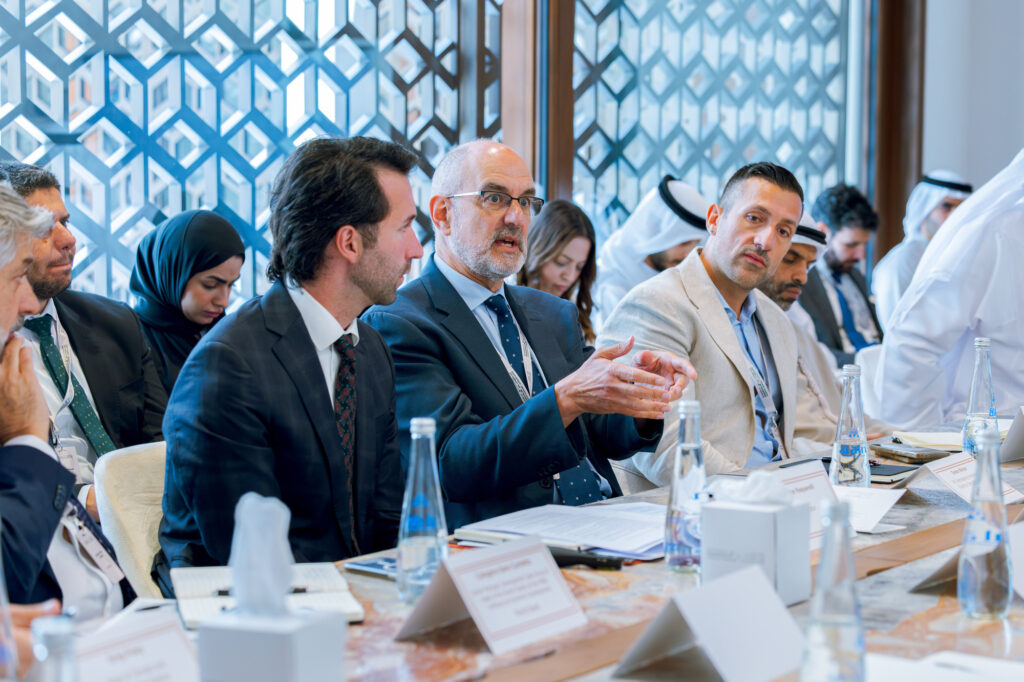
Delegates explored both the opportunities and limitations of AI within humanitarian settings. While significant progress has been made in predictive modelling and forecasting, discussions repeatedly returned to the importance of governance, trust, data, institutional coordination and responsible deployment. The consensus was clear: technological advances alone will not close the gap between prediction and action.
The event highlighted the growing need for collaborative approaches that combine technological innovation with practical implementation, robust governance and meaningful engagement across the humanitarian ecosystem.
We are grateful to ODA and all participants for their contributions to an important and forward-looking discussion, and we look forward to supporting future efforts to strengthen anticipatory action through responsible and effective use of AI.
“At Hyphen, the focus is on turning complex, fast-moving ideas into structured action – through research, curated expertise and carefully designed convenings that help organisations move from discussion to delivery,” Kamila added. “This initiative reflects that approach, bringing evidence and collaboration together to support more effective humanitarian decision-making, and we look forward to working on similar initiatives in the future.”
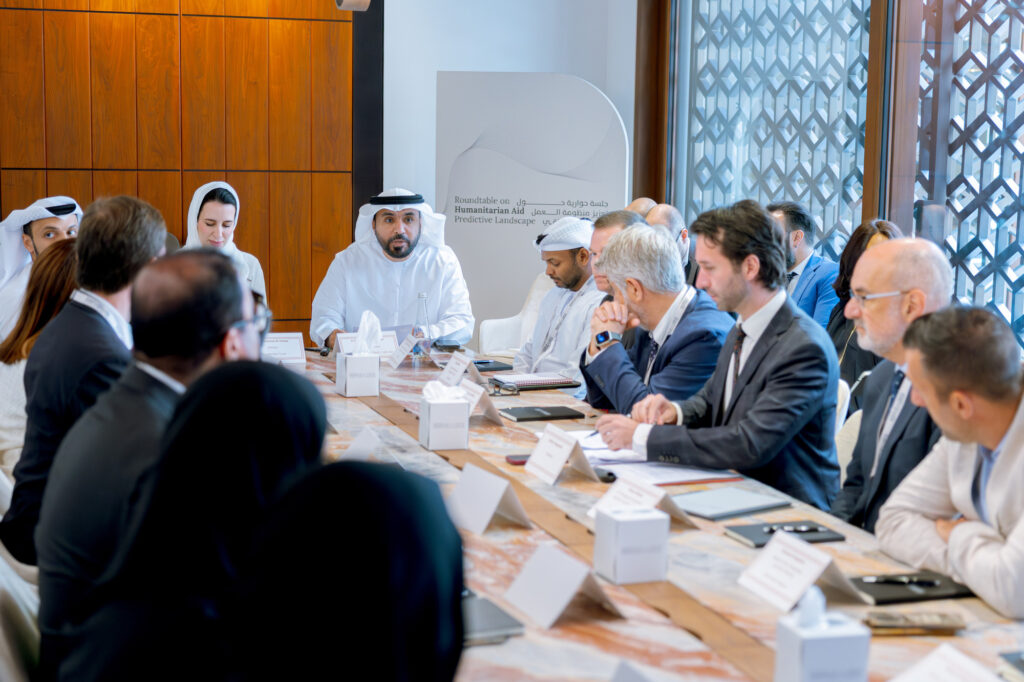
Expert ‘energised’ by frankness of dialogue and commitment to finding solutions
The roundtable moderator and white paper editor was Hyphen expert Walter M. Pasquarelli, an AI strategy and governance advisor who works with ministers, heads of state, and Fortune 100 executives.
As creator of the Government AI Readiness Index at Oxford Insights, an advisory group member to the OECD and former Manager of AI and Society at The Economist, Walter is well placed to provide input and insight into conversations around the use of artificial intelligence within public-sector settings.
Speaking after the roundtable, he was impressed by the quality of the dialogue and the desire among the group to push each other in pursuit of effective humanitarian aid solutions.
“Genuinely energising,” he said of the overall experience. “We set out to test an idea rather than to confirm one, and the room obliged, candid, expert, and refreshingly willing to disagree.
“What stayed with me was the quality of the conversation: people who spend their working lives on these problems, speaking plainly about what works, what does not, and what we are all still getting wrong.”
Bringing together stakeholders from entirely different backgrounds into one setting is important for generating fresh, cross-functional perspectives.
Walter – an Affiliated Researcher with the University of Cambridge – believes the kind of frank discussions held at roundtable are crucial in helping to identify and overcome potential ‘gaps’ before they become problems when action is needed.
“The challenges we are dealing with, anticipating crises, getting help to people sooner, do not sit neatly inside any one institution, and they will not be solved inside one either,” he explained.
“The value of putting a UN agency, a development bank, a foundation and a data scientist around the same table is that each sees a different part of the picture, and the gaps only become visible when you hold those views up against one another.
“Convening is not a substitute for action, but little useful action happens without it first.”
Identified by our team as a potential asset for this event, Walter added of the experience of working with us: “Hyphen were a genuine partner, which is rarer than it should be.
“They brought real facilitation competence and a fluency in the local landscape that you cannot improvise, and it showed in the details: the things that go right and that nobody notices precisely because someone capable was looking after them.
“They understood what we were trying to achieve and helped us get there. I would happily work with them again.”
Engage us to help your organisation work through complex challenges
Whether exploring the implications of emerging technologies, shaping public policy, or building consensus around a strategic challenge, organisations increasingly need trusted partners who can combine deep research, stakeholder engagement and practical facilitation.
Hyphen works with governments, institutions and organisations to design and deliver high-impact research programmes, expert convenings and strategic dialogues that lead to meaningful outcomes.
To discuss how we can support your next initiative, get in touch with our team.